

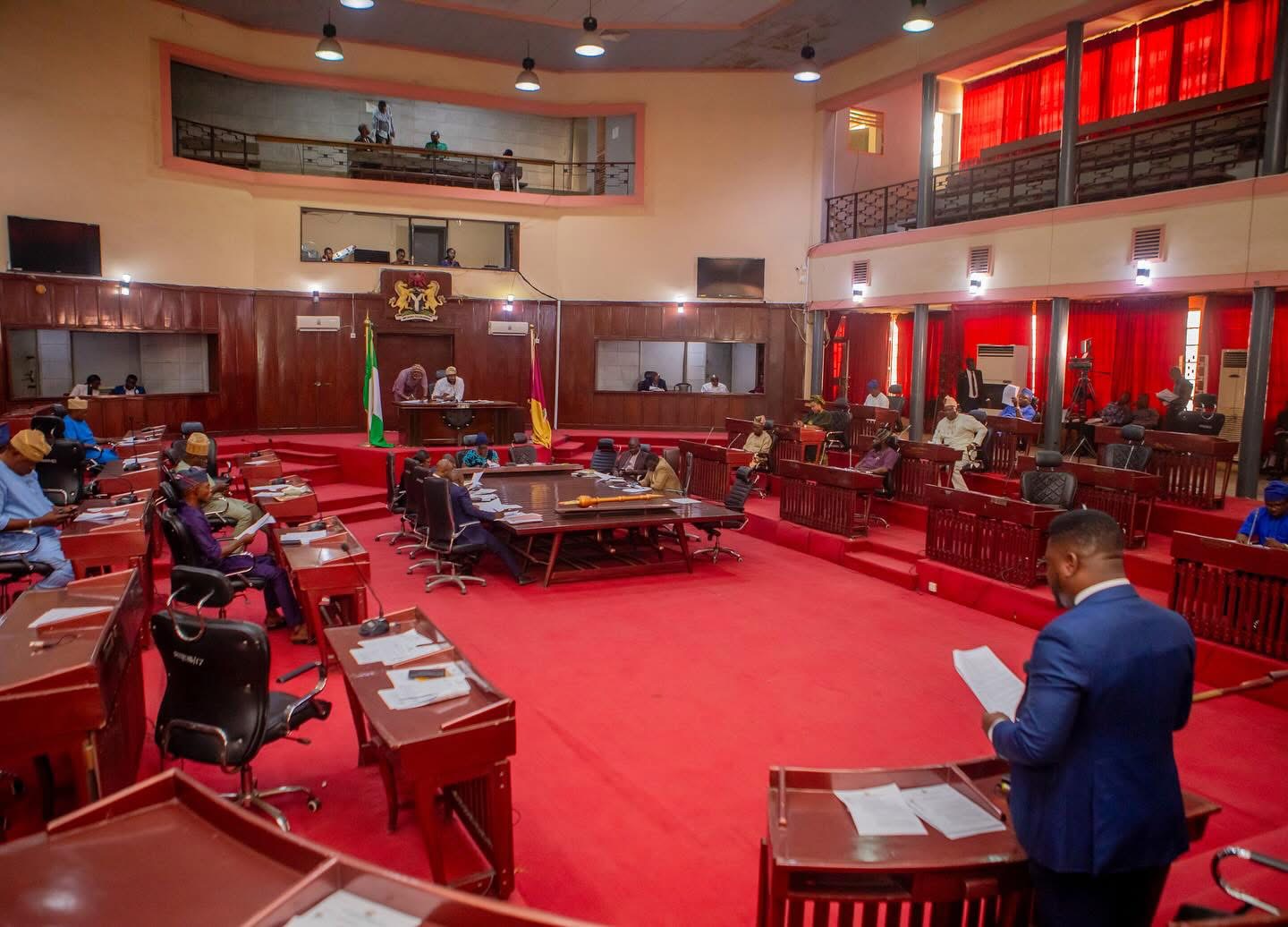
The Oyo State House of Assembly has passed the Constitution of the Federal Republic of Nigeria (Sixth Alteration) Bill, 2026, seeking to provide a constitutional framework for the establishment and operation of State Police Services across Nigeria.
The Bill was passed at plenary after clause-by-clause consideration by the lawmakers. The sitting was presided over by the Speaker of the House, Rt. Hon. Adebo Edward Ogundoyin.
The consideration followed the reading of a letter from the Clerk to the National Assembly, Kamoru Ogunlana, transmitting the bill to the Oyo Assembly for consideration and approval.
The Senate passed the bill on June 24, 2026, while the House of Representatives passed it on July 23, 2026, and called on state legislatures to give it expeditious consideration to facilitate the completion of the constitutional amendment process under Section 9 of the 1999 Constitution.
Speaking during the sitting, Ogundoyin said the passage of the bill would have significant legislative implications for the Oyo Assembly, particularly the need to develop a comprehensive State Police Law capable of translating the constitutional framework into an effective operational institution.
Explaining the provisions of the bill, the Oyo Assembly Speaker said the proposed amendment would restructure Nigeria’s policing system by providing for a Federal Police Service alongside State Police Services.
“The bill would empower each state to establish its own Police Service through legislation by the State House of Assembly, while defining the respective responsibilities of federal and state police authorities,” he said.
According to him, state police would be responsible for enforcing state laws, maintaining public safety and order, preventing and detecting offences, protecting lives and property, and performing other local policing functions prescribed by state law.
According to him, State Police would be responsible for the enforcement of state laws, public safety and order, prevention and detection of offences, protection of life and property, and other local policing functions prescribed by state law.
Ogundoyin explained that the proposed framework would also establish State Police Service Commissions with responsibilities covering the appointment, promotion, transfer, discipline, oversight, complaints and accountability of state police personnel.
He noted that the Bill provides for a State Commander of Police to head each State Police Service, with the Commander to be appointed by the Governor on the recommendation of the National Police Council and subject to confirmation by the State House of Assembly.
The Speaker also highlighted provisions empowering the National Assembly to prescribe minimum policing standards for both federal and state police services, while allowing states to prescribe higher or additional standards.